
The work
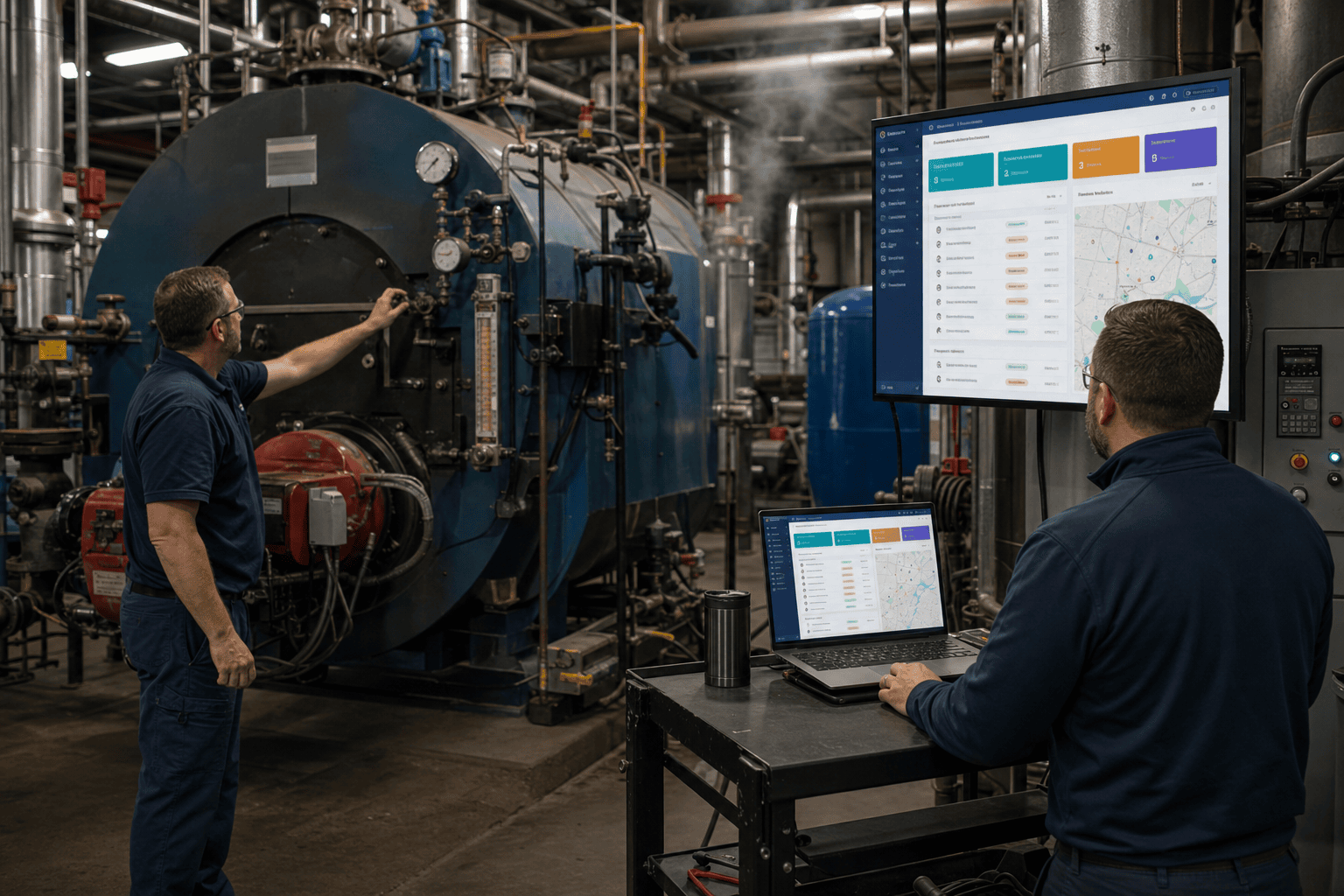
Burner Combustion Systems is a Texas-based industrial boiler and burner services company — selling, installing, commissioning, and servicing the steam and hot-water systems that run distilleries, food and beverage plants, hospitals, and other facilities across the U.S. southern tier. The work mixes long-cycle capital equipment sales (boilers, burners, control panels, deaerators, retubes) with field service, parts, water treatment, and service agreements — a single deal can range from a few thousand dollars in parts to several hundred thousand dollars of installed equipment, with a sales cycle that can run six months to a year.
KimbleLabs and Full Steam Consulting partnered with BCS to install a sales operation from a clean slate. Full Steam delivered the sales-process design, training, and ongoing coaching; KimbleLabs delivered the Zoho CRM build, the automations, and the system architecture that holds it together — including a custom After Sales Ops module that picks up where the sales pipeline ends and runs equipment delivery through to commissioning.
The Challenge
Before working with KimbleLabs and Full Steam, BCS was selling without a shared sales system. Reps worked the way they always had — calls, visits, relationships and quotes kept in individual inboxes and spreadsheets, deal status tracked from memory. A small set of records from an earlier PipeDrive trial sat in the database, but it hadn't taken hold. There was no shared pipeline, no forecast, no win/loss tracking, and no structured handoff from a closed sale to the equipment delivery that followed.
For ownership, that meant a simple question — what's actually in the pipeline? — couldn't be answered without manual effort every time to review, document, and report. Ownership wanted analytics and KPI dashboards, but the underlying data didn't exist in a consistent, always-current form. On the operations side, field service ran through a third-party product the team was trying to leave, and the path from a closed sale to a delivered, commissioned piece of equipment depended on a project manager picking up each deal by hand.
The goal was to put both pieces in place at once: a sales process that defines how the team sells, and a CRM environment that reinforces that process and creates a foundational structure required for the company to scale operations.
The KimbleLabs + Full Steam Solution
KimbleLabs and Full Steam installed the sales operation as a single engagement — Full Steam owning the process design and coaching, KimbleLabs owning the Zoho CRM build that holds the process in place. The build focused on three things: matching the two distinct sales motions the business runs (equipment vs. service), making the CRM the path of least resistance for the sales team, and giving leadership real reporting for the first time.
- Two-pipeline Deal blueprint. An Equipment pipeline for boilers, burners, controls, deaerators, and project work — long cycles, multiple stakeholders, vendor submittals, management approvals. A Service pipeline for field service, retubes, service agreements, and water treatment — shorter cycles, different approvals. Each carries its own stage path with required fields at each transition and structured win/loss reasons captured at close.
- A sales process that lives in the CRM. Full Steam's methodology defines what each stage means and what's expected at each step; the CRM requires the key pieces — close date, amount, contact, lost reason — at the stage transitions, so the process is part of the workflow rather than a separate document. This also generates the metrics and KPIs already being used in CRM Analytics that are critical to effectively managing, and growing the business.
- Deal-level routing and automatic file foldering. A "Deal Includes" field captures what's actually on each deal, and downstream automations key off it — deciding whether a closed-won deal becomes a project, a parts order, or a service job. When a Deal is created, a WorkDrive folder structure is generated and linked automatically, so quotes, drawings, submittals, and POs live in one place per deal.
- Forecasting and rep visibility. Zoho's Forecast Category (pipeline / best case / committed) is wired to the blueprint stages, so leadership can see committed pipeline for the quarter without building a spreadsheet. Rep scorecards and manager summary views show deal count and pipeline dollars by rep, stage, and quarter, and Full Steam runs its coaching cadence on top of that data.
- After Sales Ops module — the equipment delivery layer. A custom Zoho CRM module that creates automatically when an equipment deal reaches Closed Won. One record per deal moves through a nine-stage coordinated path with vendor, PO, and ship-date fields and an asset-registration gate at commissioning. The handoff from sales to operations is now a record rather than a hallway conversation.
- Field service moving into Zoho FSM. With the sales operation in place, the team is migrating its third-party field-service product into Zoho FSM — built around dispatch and mobile field use, with the CRM remaining the customer and equipment master.
"It's working. The sales team is dialed in now — everyone's on the same pipeline, and we can stay on top of every deal instead of chasing it down. It's already changed how we operate."
Results
Since the rollout, BCS has moved from selling without a shared system to running a structured pipeline that leadership can lead with — and operations now picks up where sales ends rather than starting from scratch. The biggest wins are operational rather than headline metrics.
- A real pipeline, by rep. Every salesperson now works in the system — deals get created, stages move, amounts and close dates get filled in — and the rep-scorecard view makes the activity visible.
- A forecast leadership can use. The Forecast Category structure produces a current view of pipeline, best case, and committed dollars without anyone running an export, with month-over-month and year-over-year trends on a dashboard.
- Lost deals leave a trail. Closed-lost reasons are a structured picklist with notes — price, delivery, funding, competitor — so "why are we losing" can be answered with data.
- The sales-to-operations handoff is a record. Closed-won equipment deals automatically create an After Sales Ops record that walks the project from order to commissioning.
- A partnership cadence, not a one-time install. Full Steam runs the sales-process coaching with leadership and the team; KimbleLabs runs the CRM admin and the ongoing build (After Sales Ops, Field Service Management, and an eventual accounting handoff).